

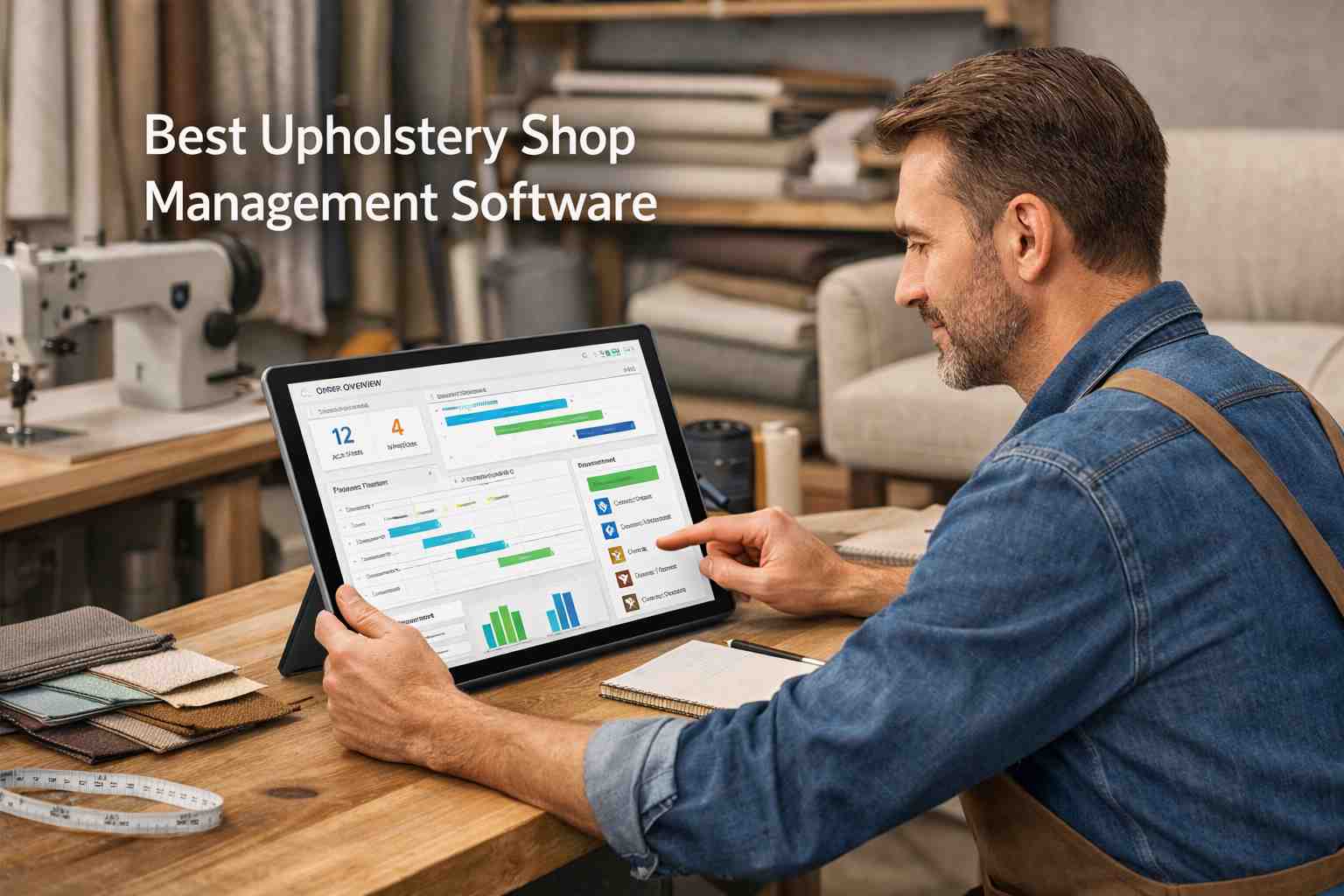
Running an upholstery shop takes more than craftsmanship. It takes planning, clear communication, accurate estimating, and strong control over materials and timelines. A shop may do excellent work on chairs, sofas, cushions, and custom pieces, but if quotes are slow, fabric gets miscounted, or projects fall behind, profit starts slipping away.
That is why more shop owners are looking for upholstery shop management software. The right system helps keep the business side organized so the team can spend more time on the work that matters.
Why upholstery shops need better systems
Many upholstery businesses still manage jobs with paper notes, text messages, spreadsheets, and memory. That setup can work when the workload is small. But once several projects are active at the same time, things get harder to control.
Fabric estimates need to be accurate. Customer approvals need to stay clear. Production timelines need to be easy to track. Invoices need to go out on time. If even one part of that process gets missed, the whole shop feels it.
That is why management software has become more important. It helps bring quoting, scheduling, materials, and project updates into one place.
What good upholstery shop software should do
The best upholstery shop management software should make daily work simpler, not harder. It should help a shop move a project from estimate to delivery without losing track of the details in between.
That means it should support clear job tracking, fabric and material visibility, customer information, scheduling, invoicing, and production status. For shops that handle custom work, estimating tools are especially important because every project can be slightly different.
A good system also helps owners see where time and money are being lost. That kind of visibility makes it easier to improve margins and run a smoother operation.
Why estimating and fabric tracking matter so much
In upholstery, one bad estimate can hurt the whole job. If the yardage is too low, the shop may need to reorder fabric, which causes delays and extra cost. If the yardage is too high, material waste cuts into profit.
That is why estimating and fabric tracking are so important. A shop needs a reliable way to calculate material needs, manage pattern repeat, and keep inventory organized. Without that, every job carries more risk than it should.
The best software helps reduce that guesswork. It gives the team a better process for planning jobs before the work begins.
Project tracking keeps the shop moving
A lot of shop stress comes from not knowing exactly where each project stands. One customer is waiting on pickup. Another is asking for a quote update. Another piece is blocked because fabric has not arrived yet.
When project tracking is weak, the day turns reactive. The team spends time searching for updates instead of doing the work.
Good upholstery shop software solves that by making every job easier to follow. When owners and staff can quickly see what is quoted, approved, in progress, delayed, or ready for delivery, the whole workflow becomes easier to manage.
How StitchDesk can help
StitchDesk stands out because it appears to be built around the real workflow of upholstery shops. Its features focus on the problems shop owners deal with every day, including yardage estimating, project tracking, fabric inventory, scheduling, invoicing, and reducing waste.
That makes it especially relevant for smaller and growing shops that want a more organized system without adding unnecessary complexity. If a platform helps the team estimate fabric more accurately, keep projects moving, and reduce missed details, it can improve both efficiency and profit.
For upholstery businesses that want stronger control over operations, StitchDesk looks like a practical fit.
What shop owners should look for before choosing software
The best software is not always the one with the most features. It is the one that matches how the shop actually works.
Owners should look for a system that feels easy to use during a busy day. It should support estimating, project flow, inventory, and invoicing in a way that saves time rather than creating more admin work. It should also make customer communication easier, since clear updates can reduce confusion and build trust.
A strong system should support the full shop process, not just one isolated task.
Better systems support better service
Customers notice when a shop is organized. They notice when estimates are clear, timelines make sense, and updates are easy to get. That kind of experience builds trust and often leads to better reviews and referrals.
This is one reason management software matters beyond operations. It helps improve the customer side of the business too. A more organized process usually leads to smoother communication and fewer avoidable problems.
Final thoughts
The best upholstery shop management software helps shop owners stay organized, estimate more accurately, reduce waste, and keep projects moving from quote to delivery.
For a busy upholstery shop, that kind of structure can save time and protect margins. It can also make the business feel more professional for both the team and the customer.
In a trade where details matter, the right software can make a real difference.